

Side Hustle Taxes in Canada: What the CRA Actually Requires

All provinces in Canada
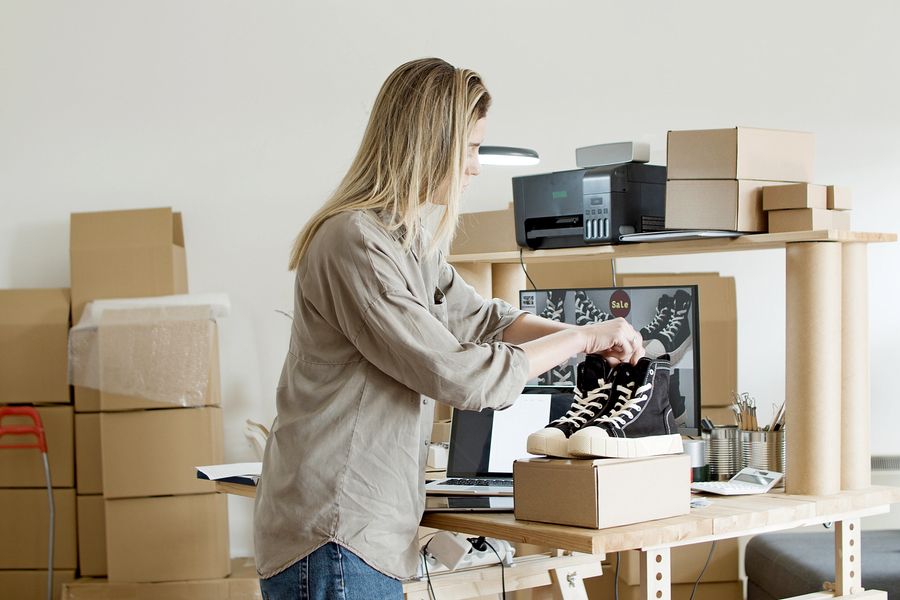
Freelance gigs after work. Weekends selling on Etsy. A few delivery shifts a month. Other countries give casual earners a small tax-free allowance — Canada does not. Side income here is taxable from the first dollar. Here is what the CRA requires when the money sits on top of a regular job, drawn from its guidance on taxes and the platform economy.
It all counts, from the first dollar
No minimum, no allowance. There is no amount of side income you can leave off your return. The $30,000 figure is a GST/HST rule (covered below), not an income tax threshold. Whether your hustle brought in $400 or $40,000, the net income belongs on your tax return.
Business income, on your personal return. If you work for yourself — your own clients, your own prices, your own risk — the money is business income, not employment income. There is no separate business return: you report it on your T1 using Form T2125, the Statement of Business or Professional Activities, stacked on top of your job income. Self-employed filers get until June 15 to file, but any balance owing is still due April 30.
Selling your own stuff is different. Clearing out your closet or selling a used bike is not a business. Buying, making, or flipping things regularly to earn money is.
The $30,000 line is about GST/HST
Small supplier status. While you are a small supplier, you do not have to register for GST/HST. You stop being a small supplier once your total revenues from worldwide taxable supplies pass $30,000 in a single calendar quarter, or over the last four consecutive calendar quarters. Gross sales count, not profit — and sales by businesses associated with you count too.
Below the line, you can register voluntarily. The trade: you charge GST/HST and file GST/HST returns, but you can claim input tax credits, recovering the GST/HST you paid on business purchases. Once registered, that is the deal either way: charge it, file it, claim your credits. One exception: taxi and commercial rideshare drivers must register even as small suppliers — the $30,000 cushion does not apply to fares.
Selling through an app? The platform reports you
Since January 1, 2024, the Reporting Rules for Digital Platform Operators require platforms to collect seller identification and activity information — name, address, tax number, amounts paid, by quarter — and report it to the CRA, covering goods, services, property rentals, and rideshare and delivery work. You get a copy of what was reported by January 31 each year: a handy cross-check for your return.
One narrow carve-out: a seller with fewer than 30 platform sales of goods totalling $2,800 or less in the year is an excluded seller, not reported. Services have no such minimum. The safe assumption: if you earned it on a platform, the CRA can see it.
Two costs people forget: CPP and instalments
CPP, both halves. On a paycheque, you and your employer split Canada Pension Plan contributions. On self-employment earnings there is no employer: self-employed workers pay both the employee and employer portions of CPP, worked out on Schedule 8. It is the surprise line in many first-time side hustlers’ tax bills.
Instalments, once the bill gets big. If your net tax owing is more than $3,000 in the current year and was also over $3,000 in either of the two previous years, the CRA expects quarterly instalment payments (March 15, June 15, September 15, December 15) instead of one spring bill. The threshold is $1,800 for Quebec residents.
Expenses bring the bill down
You are taxed on net income, not gross: reasonable expenses incurred to earn the side income come off the top. The usual ones: platform and payment fees, materials and inventory, software, shipping, and the business portion of shared costs like your phone or home office. Claim only the business share of anything mixed-use — and keep the receipt behind every number. Our T2125 deductions guide goes through the categories in detail.
A worked example
Devon sells prints on Etsy and at weekend markets alongside his day job. He takes in $9,600 of sales and spends $2,350 on printing, platform fees, and stall rentals. His T2125 reports $9,600 gross and $7,250 net, added to his employment income, with CPP owed at both portions. For GST/HST, rolling four-quarter sales of $9,600 leave him a small supplier — no registration needed yet, until a strong year pushes the rolling total over $30,000. Etsy reports his totals to the CRA and sends him the summary by January 31, so his T2125 gross should match it.
Keep the receipts
The CRA requires you to keep your records for six years from the end of the last tax year they relate to, unless it gives you permission to destroy them early. Paper or electronic copies both work. Platform summaries help, but the receipt is what backs up each expense if the CRA asks.
How Lemon fits
Lemon keeps your side hustle in its own business account, separate from your salary: log income as it lands, scan receipts as you go, and let tags sort platform fees from supplies. Your running sales total stays in view, so you see the $30,000 GST/HST line coming — and if you register, your GST/HST reporting starts from records already organised. It’s the same habit behind separating business and personal spending.
New to earning on the side? Start with simple side hustles you can start with almost no money, and from your very first payment, use the set-aside rule so the tax money is never spent by accident.
This article is general information, not tax advice. For your specific situation, talk to an accountant.
Download Lemon free on the App Store or Google Play — log your side income as it lands and keep a running eye on the $30,000 GST/HST line.



About this author
Contribute your article